
5 Weekly Home Office Organization Tasks That Prevent Clutter
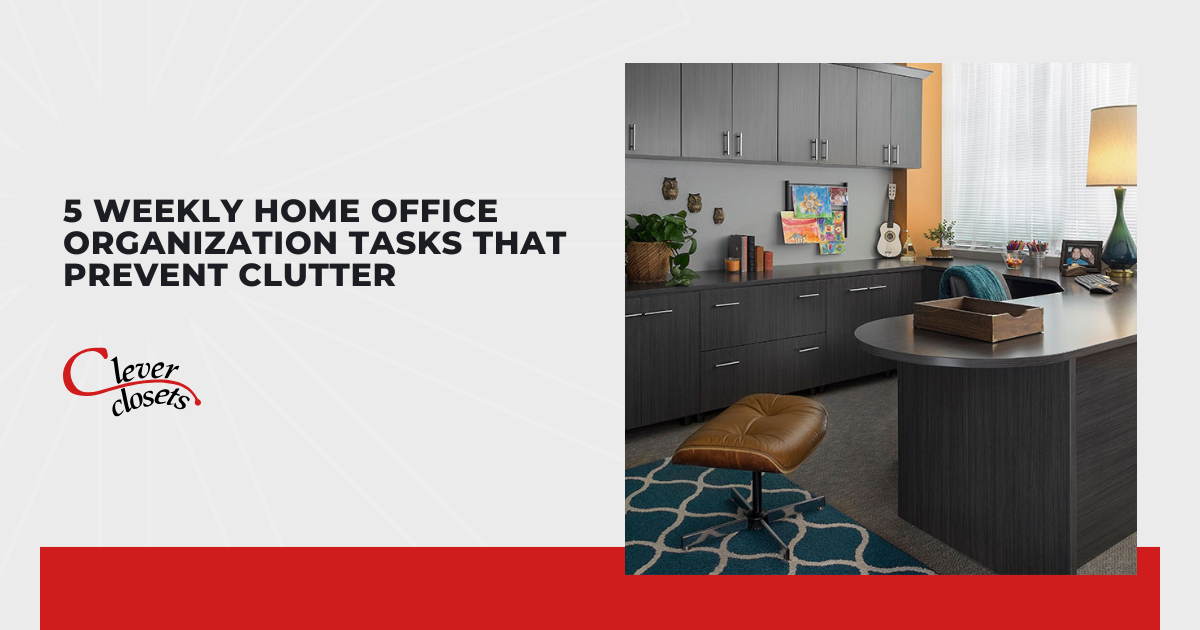
Clutter has a sneaky way of building up in a home office, even when you feel like you’re “mostly” staying on top of things. A couple of loose papers here, an extra mug there, and suddenly your desk feels crowded and your focus feels scattered. In my work organizing homes, I’ve noticed it’s rarely one big mess that causes frustration; it’s the small piles that quietly multiply. A simple weekly routine can keep your space clear without turning organization into a full-time job.
I like weekly tasks because they’re realistic and preventative, not overwhelming. Instead of waiting for a day when you have the motivation to overhaul everything, you’re doing quick resets that stop clutter from taking root. Think of it like a weekly “closing shift” for your workspace—small effort, big payoff. These habits are designed to support real life, not create another to-do list you dread.
Here are the five weekly home office organization tasks that prevent clutter:
- Reset the desk surface
- Sort and process paperwork
- Reorganize the drop zone
- Declutter supplies (physical and digital)
- Plan and prep for the upcoming week
You don’t need to tackle these all at once or do them perfectly. Even small, consistent efforts can completely change how your space feels.
Reset the Desk Surface
The desk is usually the first place clutter shows up in a home office, because it’s where you land things while you’re thinking. Even when you’re productive, items like receipts, notebooks, chargers, and sticky notes can gather in your line of sight. I’ve found that a desk reset works best when it’s treated like a weekly reset rather than a deep clean. The goal is to bring your desk back to a calm baseline, not to make it look untouched.
Start by clearing everything off your desktop that doesn’t need to be there every day. Put away reference materials, extra office supplies, and anything that belongs elsewhere in the house. Then take a moment to wipe the surface, because that physical act helps reinforce the idea of starting fresh. When items go back, return only what you truly use daily and group them intentionally.
If your desk keeps filling up, it’s often a sign that something doesn’t have a clear home yet. Adding a small tray, drawer insert, or container can give those frequently used items a designated place. When your desk has a simple structure, it’s easier to maintain throughout the week. Over time, this weekly reset prevents clutter from slowly creeping back in.
Sort and Process Paperwork
Paper is one of the most common sources of clutter in a home office, and it tends to create mental stress along with physical mess. Even a small stack can feel heavy because it represents unfinished decisions. In my experience, the issue usually isn’t the volume of paper; it’s not having a consistent system to move it along. A weekly paperwork routine keeps those piles from building up.
I recommend sorting paper into three categories: file, action, or recycle. Keeping the categories simple makes it easier to decide quickly, which is what prevents paper from lingering. If it helps, here’s what I mean:
- File: Documents you need to keep (like tax records or contracts) that go straight into a labeled folder.
- Action: Paperwork that requires a next step (like a form to complete or a bill to review) that lives in one dedicated spot.
- Recycle/Shred: Anything you don’t need that gets removed immediately so it doesn’t hang around.
If you prefer to keep things digital, a weekly scanning routine can be helpful. I always suggest saving files using a consistent naming system so they’re easy to find later. Once documents are safely stored, remove the paper versions if possible. This habit keeps paper moving through your home office instead of settling in permanently.
Reorganize the Drop Zone
Almost every home office has a drop zone, whether it’s intentional or not. It might be a corner of your desk, a chair, or the top of a filing cabinet where things land “just for now.” I don’t see drop zones as failures. They’re usually a sign of a busy schedule and good intentions. The key is resetting them regularly so they don’t become long-term clutter magnets.
Once a week, clear the drop zone completely and return items to their proper homes. As you do this, pay attention to what shows up there again and again. Repeating items are valuable clues about what needs a more convenient storage solution. Organization works best when it supports your natural habits instead of fighting them.
If something keeps landing in the same spot, consider adjusting where its home is or add a simple containment tool that makes putting it away easier. A few options that tend to work well in a home office are:
- A small tray for daily loose items
- A vertical file for incoming papers
- A basket/bin for cords or tech
- A hook for headphones
When storage is easy to access, items are more likely to be put away. That’s what turns a cluttered drop zone into a functional space. And once the drop zone is under control, the rest of the room tends to feel calmer too.
Declutter Supplies (Physical and Digital)
Supplies often create hidden clutter because they’re tucked away in drawers and cabinets. Over time, a home office can fill up with dried-out pens, outdated tech accessories, and duplicates you don’t realize you have. I’ve opened many drawers that look organized until you actually try to use them. A small weekly edit keeps supplies manageable.
Choose one small area each week, such as a drawer section, pen cup, or shelf. Remove anything broken, expired, or unnecessary, and be honest about what you actually use. Keeping fewer supplies doesn’t mean being unprepared; it means you can see what you have and access it easily. When drawers aren’t overstuffed, they’re much easier to maintain.
Digital clutter deserves the same attention. A quick weekly reset might include clearing your desktop downloads, filing important documents, or closing browser tabs you no longer need. I also recommend archiving or deleting emails that no longer serve a purpose. When your digital space feels lighter, your home office feels calmer overall.
Plan and Prep for the Upcoming Week
This step is about preventing clutter before it starts. A home office functions best when it’s set up for what you’re actually doing next, not everything you might do someday. Weekly planning turns organization into support instead of another chore. It helps your space work with you, not against you.
Take a few minutes to look at the upcoming week and identify what you’ll need most. Pull out relevant materials and put away anything unrelated to current projects. Even if something is useful, it doesn’t need to be visible if it’s not needed right now. Fewer items in sight means fewer distractions.
If you like having a simple routine to follow, here’s an easy weekly prep sequence:
- Review your upcoming week and top priorities.
- Pull out materials for active projects.
- Put away anything unrelated to the next seven days.
- Stage daily essentials where you’ll reach for them first.
I also recommend ending the week with a quick reset so you can start fresh. Return loose items to their homes and stage the basics so Monday feels easier. A little preparation goes a long way toward keeping your home office functional.
Conclusion
A clutter-free home office often comes down to having a few simple routines you can return to when life gets busy. When you focus on prevention instead of constant cleanup, your space becomes easier to maintain and more enjoyable to use. Small, consistent habits make a bigger difference than occasional deep cleans. Start small, stay consistent, and let your home office support your work instead of adding stress to it.
Clever Closets Inc.
Fenton, MI
Monday - Friday: 8am - 5pm
Saturday - Sunday: Closed