
How to Reset Your Custom Closet System in One Weekend
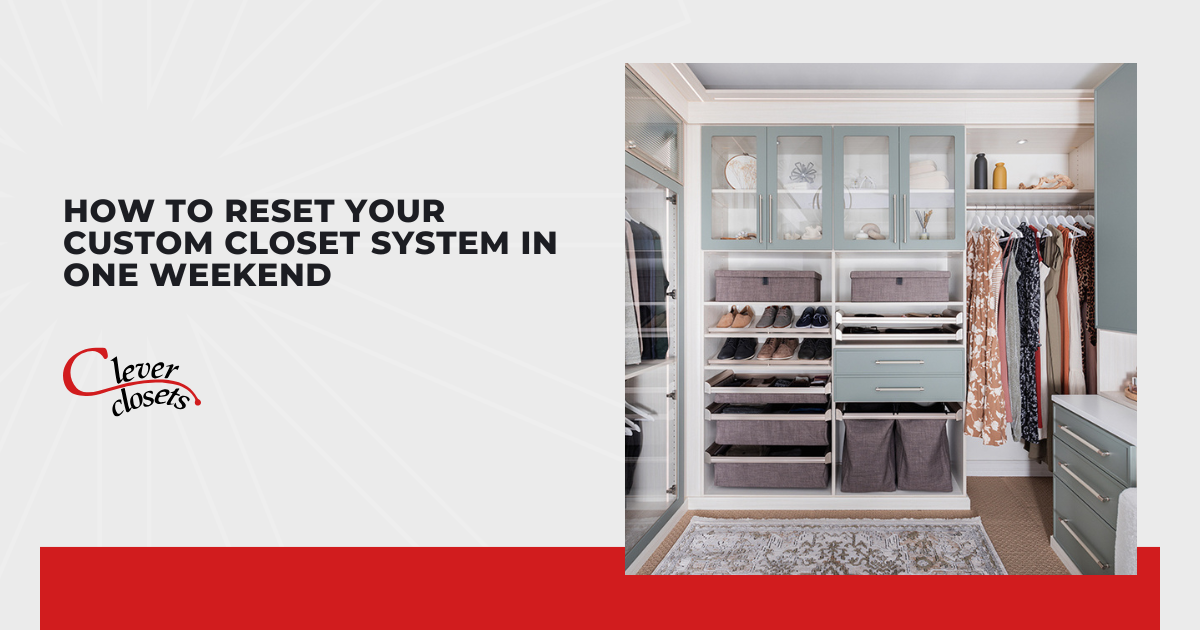
Even the most organized closets can slowly drift out of order. Over time, shelves get crowded, sections become unbalanced, and small piles start forming in the corners. I’ve seen how easily well-designed custom closet systems can lose their rhythm when daily life gets busy. The good news is that you don’t need a full redesign to get things back on track.
A focused weekend reset can make a noticeable difference. With a clear plan, you can declutter, adjust sections, and restore structure without overwhelming yourself. A simple refresh can help your closet feel functional again instead of frustrating.
Here are some of my recommended tips on how to refresh your custom closet system over the weekend:
- Empty and assess the current layout
- Edit your wardrobe
- Reconfigure shelves and hanging sections
- Reset storage categories
- Deep clean and refresh
- Maintain the reset long-term
Breaking the reset into clear, manageable steps makes it much easier to complete in a single weekend.
Empty and Assess the Current Layout
Resetting your closet starts with clearing it out one section at a time. Taking everything out may feel disruptive, but it gives you a clear view of how your custom closet systems are actually functioning. I’ve found that clutter tends to build quietly in upper shelves and corners where it’s easy to ignore. Seeing the structure completely exposed helps you evaluate the layout with fresh eyes.
As you empty each section, pay attention to what feels overcrowded and what feels underused. Some hanging rods may be overloaded, while certain shelves barely hold anything. Patterns become much easier to recognize when nothing is covering them up. That visibility helps you understand where simple adjustments can make the biggest difference.
This step also creates a clean starting point before you begin reorganizing. Working with a blank slate prevents you from shifting clutter from one area to another. It gives you the opportunity to rethink placement instead of just tidying surfaces. A full reset like this sets the tone for a more intentional reorganization.
Edit Your Wardrobe
Once everything is out in the open, the next step is deciding what actually belongs back inside. Closets tend to hold onto pieces that no longer fit, no longer get worn, or simply take up space out of habit. Sorting items into clear categories such as keep, donate, store, or discard makes the process more manageable. Reducing volume immediately creates breathing room within your custom closet systems.
Pay attention to duplicates and rarely worn items. If something hasn’t been used in months, it may not deserve prime space in your everyday layout. Seasonal pieces can be rotated out to higher shelves or secondary storage areas. Editing down the wardrobe prevents overcrowding from rebuilding too quickly.
Letting go of excess clothing makes reorganizing far more effective. Fewer items mean shelves sit flatter, hanging rods stay balanced, and drawers close without resistance. The reset becomes more sustainable when only useful pieces return to the closet. A lighter wardrobe makes maintaining order much easier moving forward.
Reconfigure Shelves and Hanging Sections
Shelves and hanging rods should reflect the clothing you actually wear right now. It’s common for a layout to make sense years ago but feel slightly off today. Long-hang space can quietly take up more room than necessary, especially if most of your garments are shorter. Shifting part of that section into double-hang space can free up capacity almost instantly.
Shelf spacing can also change how the entire closet feels. Large gaps often lead to uneven stacks or wasted vertical space that isn’t doing much for you. Bringing shelves closer together adds structure and makes folded clothing sit more securely. Small adjustments like this can make the system feel noticeably more balanced.
Hanging sections should feel evenly distributed instead of crowded on one side. Overloaded rods create visual clutter and strain hardware, while other areas sit underused. Spreading garments more evenly helps the closet look cleaner and function better. A few simple changes can bring your custom closet systems back into alignment with how you actually use them today.
Reset Storage Categories
Grouping clothing into clear categories brings structure back into the closet. Workwear, casual outfits, seasonal pieces, and occasion-specific items should each have their own defined space. Mixing everything together may seem efficient at first, but it usually creates visual clutter and slows down access. Clear separation makes the layout easier to maintain.
I like organizing sections based on how frequently items are used. Everyday clothing deserves the most accessible space, while special occasion or seasonal pieces can shift higher or further back. Rearranging categories in this way often reveals that some areas need more room than others. The system begins to feel more intentional instead of crowded.
Defined zones also make it easier to put things back where they belong. When each category has a clear home, there’s less temptation to drop items into the nearest open spot. Order becomes easier to maintain because the structure guides you. Resetting categories strengthens the foundation of your custom closet systems.
Deep Clean and Refresh
A reset isn’t complete without cleaning the structure itself. Dust, lint, and small debris tend to collect on shelves and inside drawers over time. Wiping down surfaces and vacuuming corners gives the entire space a true fresh start. Clean surfaces also make the closet feel noticeably lighter and more organized.
Drawer liners can be replaced if they’re worn or stained. Hardware should be checked to ensure everything opens and closes smoothly. Hinges, slides, and rods benefit from a quick inspection before items are returned. Small maintenance details prevent larger issues later.
This stage also offers an opportunity for subtle upgrades. Adding fresh shelf liners, uniform storage bins, or matching hangers can instantly elevate the appearance. Even minor visual improvements can reinforce the feeling of a reset. Clean, refreshed custom closet systems are easier to maintain moving forward.
Maintain the Reset Long-Term
A weekend reset feels great in the moment, but what really matters is what happens after. Closets slowly fall out of order when small items get dropped “just for now” instead of returned to their spots. One misplaced stack turns into two, and before long the structure starts slipping. Keeping things in place doesn’t require perfection, just small, steady habits.
A quick five-minute check once a week can make a real difference. Straighten a shelf, realign a hanging section, return shoes to their proper row. Those minor corrections prevent clutter from building momentum. Seasonal edits also help keep the system breathing instead of feeling tight and overloaded.
When the layout is clear, maintenance feels manageable. Putting things back becomes automatic because the space tells you where they belong. The closet starts supporting you instead of needing constant correction. Well-designed custom closet systems stay functional because they make consistency easier to sustain.
Conclusion
It’s surprising how quickly a closet can feel out of control, even when it started out organized. A focused weekend reset gives you the chance to step back, clear the excess, and bring structure back into place. I’ve experienced how different a space feels once shelves are balanced and categories actually make sense again. The closet stops feeling crowded and starts feeling usable. Small adjustments, paired with consistent habits, keep things from slipping right back to where they were. With a little intention, custom closet systems can continue supporting your routine instead of creating frustration.
Clever Closets Inc.
Fenton, MI
Monday - Friday: 8am - 5pm
Saturday - Sunday: Closed