
Top Questions to Ask Before Getting Garage Cabinets Installed
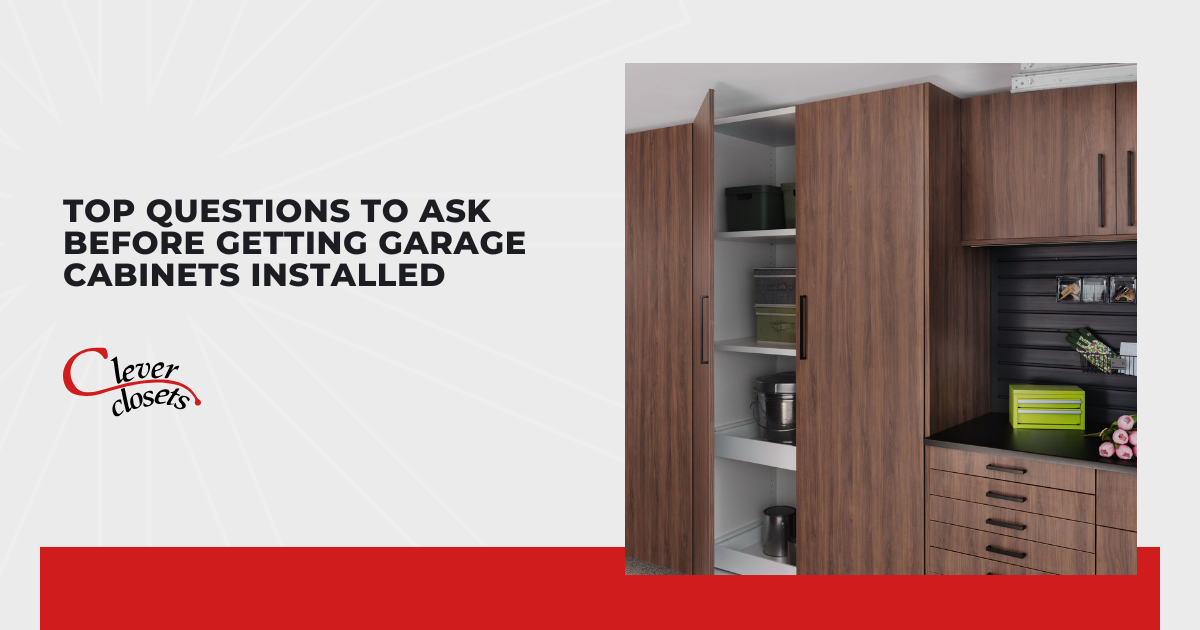
Picture this: you open the garage door, step over a pile of tools, squeeze past the lawn equipment, and spend 10 minutes looking for something that should have taken 10 seconds to find. I know, it's a frustration most homeowners I’ve worked with know all too well, and the right garage cabinets can fix it entirely. But with so many options available, from materials and layouts to mounting styles and finishes, knowing where to start isn't always obvious.
The decisions you make before any cabinet is ordered or installed will determine how functional, durable, and satisfying the end result is. Cabinet systems vary widely in quality, construction, and design, and what works for one garage won't necessarily work for another. Asking the right questions upfront is what separates a cabinet system you'll love from one you'll wish you had thought through more carefully.
Before you commit to any garage cabinet system, here are 10 questions worth asking to make sure you end up with a setup that actually works for your space.
- What will I actually store in my garage cabinets?
- What cabinet material is best for my garage?
- Are the garage cabinets custom or modular?
- How much weight can the cabinets hold?
- Will the cabinets be mounted or floor-based?
- How will the cabinet layout affect garage functionality?
- What type of finish and hardware is included?
- Is professional installation included?
- What warranty comes with the garage cabinets?
- What is the total cost of the project?
Read on to find out why each of these questions matters and what to look for in the answers.
What Will I Actually Store in My Garage Cabinets?
Before a single cabinet is ordered, it's worth taking stock of everything you're planning to store. Most garages end up housing a mix of tools, seasonal items, sports gear, automotive supplies, and household overflow. Each category comes with its own storage requirements in terms of depth, height, and accessibility, and understanding that mix upfront is what shapes the rest of the decisions you'll make.
Your storage needs will directly influence the type of cabinet system that makes sense for your space. Heavy automotive tools and equipment require deeper, sturdier cabinets with higher load capacities. Seasonal items and sports gear, on the other hand, might be better suited to overhead or wall-mounted solutions. Getting this right from the start means you won't find yourself reorganizing the entire system six months later.
It's also worth planning beyond your current needs. Families grow, hobbies change, and garages tend to accumulate more over time. A cabinet system with room to expand gives you the flexibility to adapt without starting from scratch.
What Cabinet Material Is Best for My Garage?
The material your cabinets are made of will determine how well they hold up against the daily demands of a garage environment. It's one of the most important decisions you'll make in the entire process, and it's worth understanding what each option brings to the table before committing. Here's a breakdown of the most common cabinet materials:
- Steel: For heavy-duty storage, steel cabinets are hard to beat. With powder-coated finishes, they handle extreme temperature swings, heavy loads, and daily wear better than most other materials.
- Wood: Sturdy and visually appealing, wood cabinets hold up well for general storage when properly sealed. However, they require consistent maintenance to prevent warping and cracking in fluctuating temperatures and humidity.
- Plywood: A more durable wood-based option that resists moisture and temperature changes better than MDF or particleboard. Its structural strength makes it well-suited for storing heavier items without sagging over time.
- Melamine: Low-maintenance and easy to wipe down, melamine cabinets handle everyday garage use without much upkeep. Performance drops in garages with significant humidity or temperature fluctuations throughout the year.
- MDF and Particleboard: Best reserved for climate-controlled or finished garages, as both materials are highly vulnerable to moisture and temperature swings. Better suited for lighter storage needs where heavy loads aren't a factor.
- Plastic: Moisture-resistant and immune to rust and corrosion, plastic cabinets hold up well in damp garage environments. Load capacity is limited, making them better suited for lighter items and basic organization.
- Aluminum: Corrosion-proof and structurally reliable in high-humidity environments, aluminum cabinets maintain their integrity through harsh seasonal changes. Lighter than steel but still capable of handling moderate to heavy storage needs.
Think about how your garage is used day to day and let that guide your material decision.
Are the Garage Cabinets Custom or Modular?
The first thing to clarify with any company is whether they offer custom-built cabinets, modular systems, or both. Custom cabinets are designed and built specifically for your garage, accounting for its exact dimensions, layout, and storage needs. Modular systems are pre-manufactured units that come in standard sizes and can be arranged in different configurations to fit your space.
Custom cabinets offer a level of precision that modular systems can't match. Every inch of wall space can be utilized, awkward corners can be accounted for, and the finished result looks like it was made specifically for that garage because it was. The tradeoff is a longer lead time and a higher price point, which isn't the right fit for every homeowner or every budget.
Modular systems work well for homeowners who want a faster turnaround or a more budget-friendly solution. They're easy to reconfigure and can be expanded as storage needs change over time. For straightforward garage layouts with standard storage needs, a modular system will often get the job done without the added cost of going custom. The key is knowing which option aligns with your space, your timeline, and what you're actually trying to achieve.

How Much Weight Can the Cabinets Hold?
Load capacity is something most homeowners overlook until it's too late. If you're planning to store heavy tools, automotive equipment, or bulk supplies, knowing how much weight your cabinets can handle before you buy is critical. A cabinet that looks sturdy on the showroom floor doesn't always hold up the same way once it's loaded with real garage equipment. Don't skip this question.
Shelving strength and wall anchoring are two areas worth asking about specifically. Shelves that aren't reinforced properly will bow or sag under heavy loads over time. Cabinets that aren't anchored correctly to the wall pose a serious safety risk, so ask the company for the exact load rating per shelf and per cabinet before committing. Get it in writing.
Signs of high-quality cabinet construction are usually visible if you know what to look for. Thicker gauge steel, reinforced corners, and solid wall mounting hardware are all indicators that a cabinet system was built to handle real weight. In my experience, the companies that are most upfront about load ratings and construction details are almost always the ones that stand behind their product the longest. Full-extension drawer slides and adjustable shelving are also worth asking about, as they speak to the overall build quality of the system.
Will the Cabinets Be Mounted or Floor-Based?
The decision between wall-mounted and floor-standing cabinets comes down to how you use your garage and what you're prioritizing in terms of storage and functionality. Wall-mounted cabinets keep the floor completely clear, making it easier to sweep, mop, and maintain the garage floor beneath them. They also create a cleaner, more organized look that makes the space feel larger than it actually is.
Floor-standing cabinets offer a different set of advantages, particularly for homeowners with heavier storage needs. They don't rely on wall anchoring for structural support, which makes them a better fit for storing very heavy items like toolboxes, automotive equipment, and bulk supplies. Their larger footprint also typically means more storage capacity overall.
The layout of your garage will often be the deciding factor between the two options. A garage that doubles as a workspace or hobby area might benefit more from wall-mounted cabinets that preserve floor space and flexibility. Garages used primarily for heavy-duty storage, on the other hand, tend to work better with floor-standing systems that can handle the load without relying on wall support.
How Will the Cabinet Layout Affect Garage Functionality?
The layout of your cabinets will determine how well your garage actually works on a day-to-day basis. A poorly planned layout can make even the most expensive cabinet system feel frustrating and impractical to use. Before anything is installed, it's worth thinking carefully about how you move through the space and what you need to access most frequently.
Preserving parking space and walking clearance are two things that are easy to underestimate during the planning stage. Cabinets that eat into parking space or block natural traffic flow through the garage create daily friction that adds up quickly. A good layout accounts for the dimensions of your vehicles, the swing of your car doors, and the clearance needed to move comfortably through the space.
Creating dedicated zones for different categories of items is another way to maximize the functionality of your cabinet system. Tools, lawn equipment, sports gear, and household overflow all have different access requirements and storage needs. Thinking through your workflow before committing to a layout means everything ends up exactly where it makes the most sense for how you actually use your garage.
What Type of Finish and Hardware Is Included?
The finish and hardware that come with your garage cabinets have a bigger impact on long-term performance and usability than most homeowners expect. Here's what to ask about before making a decision:
- Handles and pulls: Low-quality handles and pulls loosen and wear out faster than you'd expect, especially in a high-use environment like a garage. Ask whether the hardware is solid metal or hollow, and whether it's included in the quote or an additional cost.
- Hinges: Cabinet hinges take a beating in a garage setting, opening and closing dozens of times a day. Adjustable, heavy-duty hinges hold their position longer and are far easier to realign if they shift over time.
- Drawer slides: Full-extension drawer slides allow you to access everything in the drawer without digging around in the back. Soft-close slides add a level of durability and convenience that makes a noticeable difference in daily use.
- Protective finishes: A scratch-resistant, powder-coated finish protects cabinet surfaces from daily abuse a garage environment dishes out. Ask specifically whether the finish is UV-resistant, as some finishes fade or yellow when exposed to sunlight over time.
- Soft-close hardware: Soft-close doors and drawers reduce the wear and tear on hinges and slides significantly over time. I've seen firsthand how much of a difference this feature makes in how cabinets hold up after years of daily use.
Small details like these are what separate a cabinet system that holds up beautifully from one that starts showing its age within a few years.
Is Professional Installation Included?
How your garage cabinets are installed matters just as much as the quality of the cabinets themselves. A poorly installed system can lead to cabinets that aren't level, walls that aren't properly reinforced, and hardware that loosens and fails prematurely. Before signing anything, it's worth clarifying exactly what the installation process involves and who's doing the work.
Wall reinforcement is a detail that often gets overlooked during the planning stage. Cabinets anchored into drywall without hitting studs or proper backing won't hold up under real weight, and the consequences can be both costly and dangerous. Ask specifically how the company handles wall anchoring and whether they assess the wall structure before installation begins. A company that skips this step is one worth walking away from.
Leveling is another area where professional installation makes a significant difference. Cabinets that aren't installed level don't function as well as they should, with doors and drawers that stick, sag, or don't close properly. A professional installer will also have the tools and experience to work around uneven floors and walls, which are more common in garages than most homeowners realize.
What Warranty Comes With the Garage Cabinets?
A warranty is one of the clearest signals of how confident a company is in the quality of their product and installation. Without one, you have no recourse if the cabinets warp, the hardware fails, or the finish starts deteriorating sooner than it should. Always ask for warranty details in writing before any agreement is signed.
There are typically two warranties to ask about: a product warranty covering the cabinets themselves and a labor warranty covering the installation. A product warranty is usually backed by the manufacturer, while a labor warranty is the responsibility of the company doing the installation. Both should be clearly outlined in the contract, with specific terms around what's covered, what's excluded, and how long each warranty lasts.
Pay close attention to what can void the warranty, as some companies include terms that are easy to unknowingly violate. Using the wrong cleaning products, overloading shelves beyond the stated capacity, or making modifications to the cabinet system can all be grounds for voiding coverage. Read the fine print carefully and don't hesitate to ask for clarification on anything that isn't immediately clear.
What Is the Total Cost of the Project?
Understanding the full cost of a garage cabinet project upfront is the best way to avoid surprises once the work is done. Pricing can vary significantly depending on the materials, cabinet system, and scope of the installation, and not every quote covers the same things. Here are the key factors that typically influence the total cost of a garage cabinet project:
- Cabinet material and quality: The material you choose will have the biggest impact on your overall budget. Steel and custom wood systems sit at the higher end of the price range, while laminate, MDF, and plastic options tend to be more budget-friendly.
- Custom vs. modular systems: Custom-built cabinet systems require more labor, longer lead times, and specialized materials, all of which contribute to a higher overall cost. Modular systems are generally more affordable and faster to install, making them a popular choice for homeowners working within a tighter budget.
- Installation complexity: Garages with uneven floors, limited wall stud access, or complex layouts require more time and expertise to install correctly. These factors can add to the overall labor cost, so it's worth asking the company how they handle installation challenges before finalizing the quote.
- Hardware and finish upgrades: Soft-close hardware, premium drawer slides, and specialty finishes are often offered as upgrades that aren't included in the base price. Ask for a full breakdown of what's included in the quote and what costs extra before committing.
- Additional features: Overhead storage, workbenches, pegboards, and lighting are all add-ons that can significantly increase the total project cost. I've found that homeowners who plan for these features from the start tend to get better value than those who add them on after the fact.
When comparing quotes from different companies, focus on long-term value rather than upfront cost alone. A cheaper cabinet system that needs to be replaced in five years will almost always end up costing more than a quality system installed correctly the first time.
Conclusion
Asking the right questions before getting garage cabinets installed is what separates a result you'll be proud of from one you'll wish you had thought through more carefully. The material, construction quality, layout, hardware, and installation process all play a role in how well your cabinet system performs and how long it lasts. Take the time to ask these questions, compare your options carefully, and don't let a convincing sales pitch substitute for doing your homework. A company worth hiring will have clear, confident answers to every single one of them.
Clever Closets Inc.
Fenton, MI
Monday - Friday: 8am - 5pm
Saturday - Sunday: Closed